

1. The Fatal Flaw of Traditional DevOps
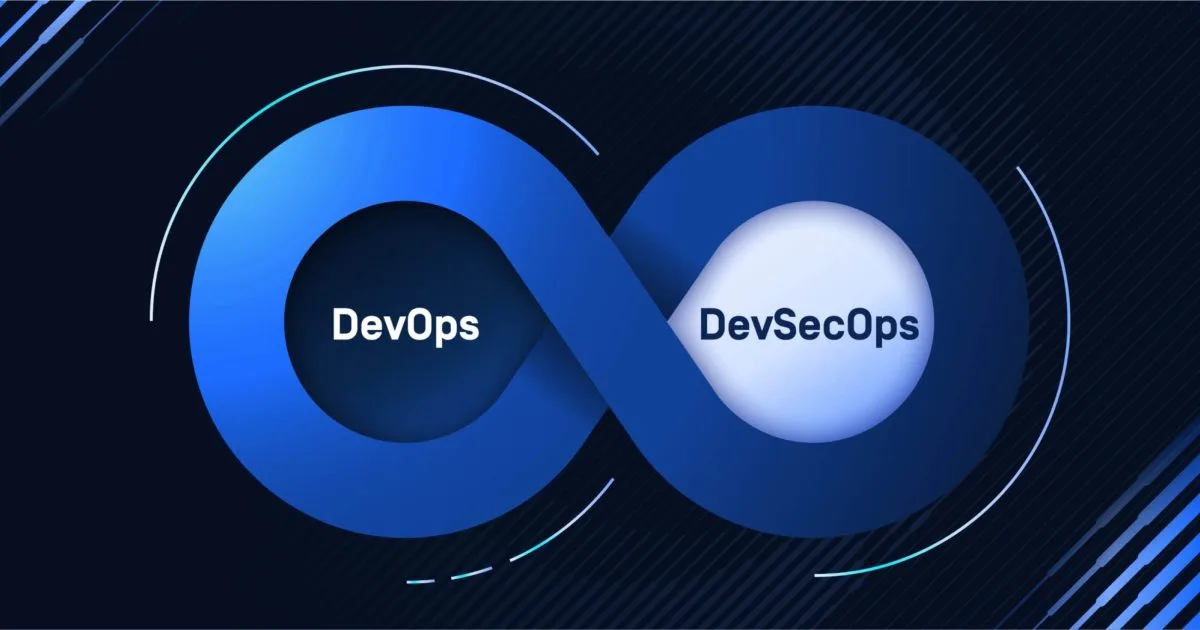
In a traditional DevOps lifecycle, the workflow looks like this: Plan, Code, Build, Test, Deploy, Operate. Notice what is missing? Security.
Historically, security was a 'bolt-on' process that happened right before deployment. A dedicated security team would perform a manual penetration test or a vulnerability scan on the finished application. If they found a flaw, they would block the release and send the code back to the developers. This created massive friction.
Developers resented security teams for slowing down their releases. Security teams resented developers for writing insecure code. Worse, because DevOps pipelines move so fast, security teams simply could not manually audit every single microservice deployment. The result was that vulnerable code routinely made it into production.
- Traditional DevOps treats security as an afterthought.
- Manual security audits create massive bottlenecks in CI/CD pipelines.
- Developers and Security teams often worked in hostile silos.
- High-velocity deployments inevitably led to un-audited, vulnerable code in production.
2. What is DevSecOps and 'Shifting Left'?
DevSecOps (Development, Security, and Operations) is a cultural and technical shift that integrates security practices into every single phase of the software development lifecycle, rather than just at the end.
The core philosophy of DevSecOps is 'Shifting Left.' If you visualize the software lifecycle on a timeline from left to right (from planning on the left, to deployment on the right), shifting left means moving security testing as close to the beginning of the process as possible.
Instead of waiting for a manual audit before deployment, a DevSecOps pipeline automatically scans the developer's code for vulnerabilities the moment they commit it to GitHub. It scans the Docker containers for outdated libraries before they are pushed to the registry. It scans the Kubernetes infrastructure code for misconfigurations before the servers are even provisioned.
- DevSecOps integrates security natively into the CI/CD pipeline.
- Shifting Left means finding vulnerabilities during the coding phase, not the deployment phase.
- It relies heavily on automated scanning tools rather than manual audits.
- The goal is to make security a shared responsibility, not just a dedicated team's job.
3. The DevSecOps Tech Stack: SAST, DAST, and SCA
Transitioning from DevOps to DevSecOps requires mastering a new suite of automated security tools that plug directly into your CI/CD pipelines (like GitHub Actions, GitLab CI, or Jenkins).
The three primary pillars are SAST, DAST, and SCA. SAST (Static Application Security Testing) analyzes the raw source code for vulnerabilities (like SQL injection or buffer overflows) without actually executing the code. SCA (Software Composition Analysis) scans your `package.json` or `requirements.txt` to check if you are importing third-party open-source libraries that have known CVEs (Common Vulnerabilities and Exposures).
Finally, DAST (Dynamic Application Security Testing) attacks the running application in a staging environment to find runtime vulnerabilities that static analysis might have missed. A true DevSecOps engineer knows how to automate all three of these scans without slowing down the deployment pipeline.
- SAST (Static Analysis): Scans raw source code for logical flaws.
- SCA (Software Composition): Scans third-party dependencies for known CVEs.
- DAST (Dynamic Analysis): Attacks the running application to find runtime flaws.
- These tools must run automatically on every Pull Request (PR).
4. Infrastructure as Code (IaC) Security
In 2026, we don't manually configure servers; we write code to provision them using tools like Terraform or AWS CloudFormation. This is called Infrastructure as Code (IaC). However, if a developer makes a typo in their Terraform script, they could accidentally provision a database that is publicly accessible to the entire internet.
DevSecOps applies security scanning directly to IaC. Tools like Checkov or tfsec parse the Terraform scripts before they are executed. If they detect a misconfiguration (e.g., 'Warning: S3 Bucket is configured to allow public read access'), the CI/CD pipeline automatically fails, preventing the insecure infrastructure from ever being built.
This is a massive paradigm shift. You are no longer securing servers after they are built; you are securing the blueprints before construction begins.
- Infrastructure is now provisioned via code (Terraform).
- A single typo in IaC can expose massive corporate databases to the public.
- DevSecOps tools scan IaC scripts to block insecure deployments automatically.
- Securing the 'blueprint' is vastly superior to patching a live server.
5. Why DevSecOps Careers Command Premium Salaries
The cloud computing market is facing a severe talent shortage. There are millions of developers who know how to write code, and thousands of DevOps engineers who know how to deploy it. But there is a massive shortage of engineers who know how to deploy it securely.
Data breaches now cost corporations millions of dollars in fines, lost revenue, and brand damage. As a result, companies are entirely restructuring their engineering departments around DevSecOps. If you can walk into an interview and demonstrate that you know how to build a Kubernetes cluster using Terraform, deploy an app using ArgoCD, and secure the entire pipeline using automated SAST and SCA scans, you become invaluable.
DevSecOps engineers regularly command salaries 20% to 30% higher than traditional DevOps engineers because they bridge the gap between two highly specialized fields: Cloud Operations and Cyber Security.
- Massive talent shortage in the intersection of Cloud and Cyber Security.
- Companies are terrified of data breaches and compliance fines.
- DevSecOps engineers combine two elite skill sets, commanding premium salaries.
- It is one of the most future-proof and automation-resistant careers in IT.
6. How to Transition into DevSecOps
If you want to enter this field, you must build a strong foundation first. You cannot secure a pipeline if you don't know how to build one. Step one is mastering traditional DevOps: Linux, Git, Docker, Kubernetes, and basic CI/CD (GitHub Actions).
Step two is learning the attacker's mindset. Familiarize yourself with the OWASP Top 10 (the ten most critical web application security risks). Understand how SQL injection, Cross-Site Scripting (XSS), and broken authentication actually work.
Step three is integrating security tools. Take an existing pipeline you built and add an SCA tool like Snyk, or a SAST tool like SonarQube. Configure the pipeline so that it fails if it detects a high-severity vulnerability. Once you can demonstrate this automated security workflow, you are officially a DevSecOps engineer.
- Foundation: Master Linux, Docker, Kubernetes, and CI/CD.
- Security Knowledge: Learn the OWASP Top 10 vulnerabilities.
- Implementation: Practice integrating Snyk, SonarQube, or Checkov into pipelines.
- Portfolio: Build a CI/CD pipeline that automatically blocks insecure code.
Conclusion
The era of 'move fast and break things' is over. In today's threat landscape, moving fast without security guarantees that the thing you break is your company's reputation.
DevSecOps is not a buzzword; it is the absolute necessity of modern software engineering. By mastering the art of shifting security left and automating compliance, you position yourself as the ultimate safeguard for enterprise cloud infrastructure—a role that will remain in astronomical demand for the rest of the decade.
Explore Local IT Training Programs
Top-rated job-oriented training & internships in Coimbatore & Chennai